
24/7 care

Blood Bank

Blood collected through the MVS blood bank is used only at MVS. We do not ship or sell blood or blood products.

Why do pets need blood transfusions?

Pets sometimes need transfusions when they experience traumatic injuries, ingest poisons (such as rodenticides), or develop life-threatening illnesses or diseases. Pets may need transfusions of whole blood, packed red blood cells, or plasma.

Your pet can be a lifesaver

Your cat or dog can be a lifesaver for a sick or injured pet. Due to the traumatic and emergent cases we see, the demand for blood products is always high. We rely on the help of willing canine and feline volunteers to keep our blood supply steady and help those pets in need. Give your pet the chance to be a lifesaver!

The benefits of being a blood donor are:
  • Free yearly laboratory testing while in the blood donor program
  • Free yearly physical examination while in the blood donor program
  • Free blood or plasma transfusion if ever needed
  • Heartworm preventive
  • Flea and tick preventive
  • Annual vaccinations
  • A 15% discount on professional services at MVS

We ask for all blood donors to:

  • Donate up to every 1 month (on average every 2-3 months)
  • Remain in the program for at least 2 years
  • Be available for emergency donations
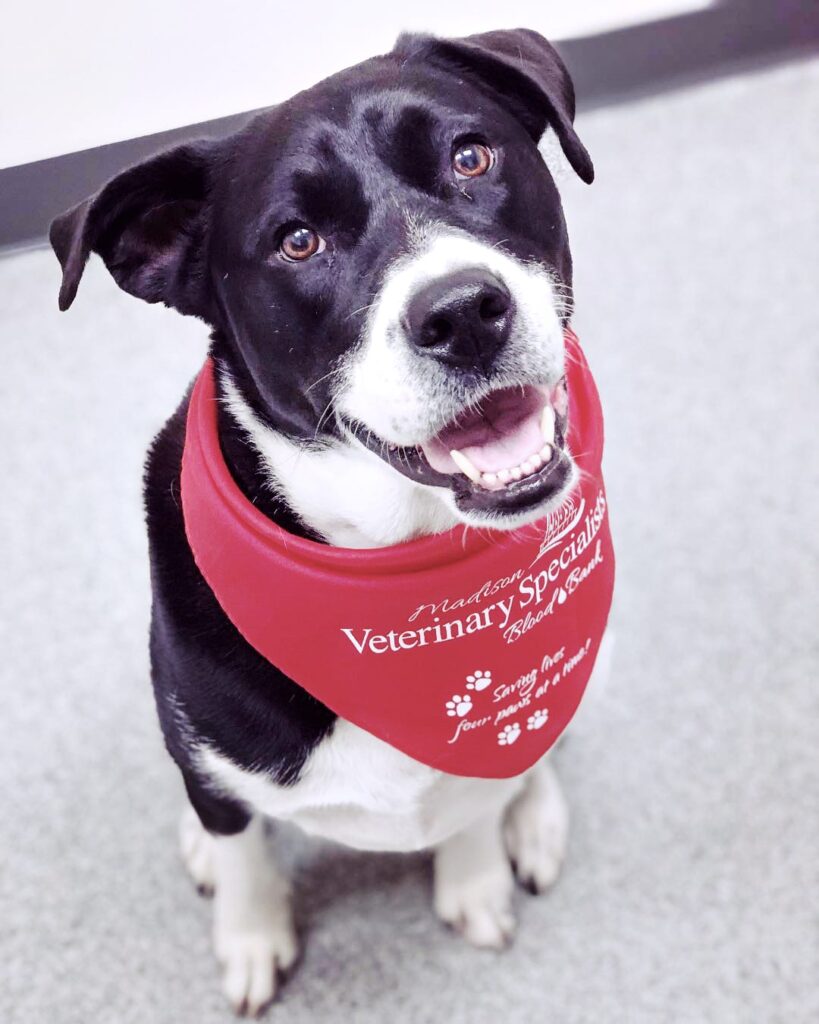
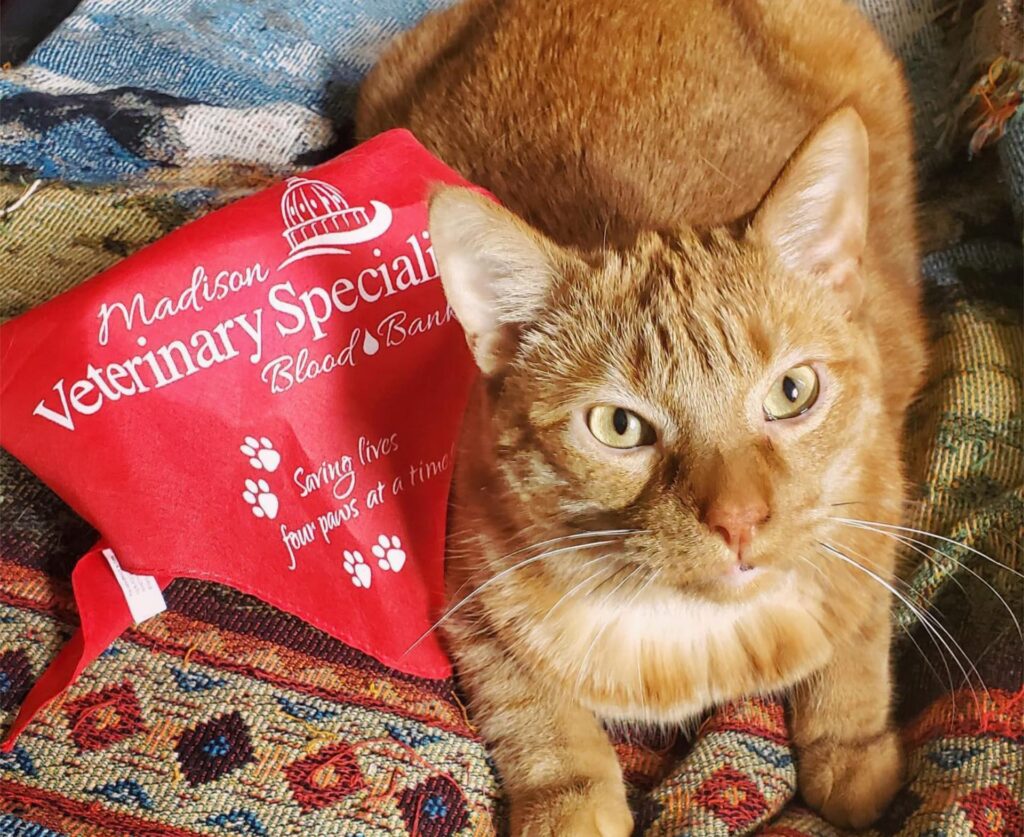
  • Allow pictures of your cat or dog in various marketing and social media promotions
Are blood donations safe?

In general, donating blood is very safe.  To ensure this safety, your pet will have to meet certain requirements to be a donor.  He or she will be thoroughly screened and examined before admission to the program.  Before every donation, an MVS veterinarian and technician will perform a complete physical exam.  Blood is collected in a sterile fashion similarly to how blood is collected from humans.  Your pet is closely monitored throughout the donation process to ensure there are no problems nor complications.

Can My Dog Donate?

Our canine lifesavers must have certain physical characteristics and meet certain requirements to be considered for the blood donor program. The requirements are:

  • Good disposition and able to tolerate venipuncture and restraint on his/her side
  • Weigh at least 50 pounds
  • No previous blood transfusions
  • Should be 1 to 8 years of age
  • Must be spayed or neutered and cannot have had a litter prior to spay
  • Current on vaccinations for Adenovirus, Distemper, Leptospirosis, Parainfluenza, Parvovirus and Rabies.
  • On heartworm preventive
  • Should not be taking any medications that could pose a problem for a recipient
  • Have a normal physical exam on initial evaluation by MVS veterinarians

If your dog meets the above criteria, various laboratory tests will be performed to ensure his/her health status and the safety of the blood donor pool. These tests will be done at no cost to you. Some of these tests will be repeated yearly while a member of the blood donor program.

Laboratory evaluation includes:

  • Must have one of the two blood types that can be used for donations.
  • Normal complete blood count, biochemical profile and urinalysis.
  • Negative result for the following infectious diseases: Anaplasma, Babesia, Brucellosis, Ehrlichiosis, and Heartworm Disease. (Leishmania and Trypanosomiasis based on breed and travel history.)
Can My Cat Donate?

Our feline lifesavers must have certain physical characteristics and meet certain requirements to be considered for the blood donor program. The requirements are:

  • Good disposition and able to tolerate venipuncture and restraint possibly with sedation or anesthesia
  • Weigh at least 10 pounds (4.5 kilograms)
  • No previous blood transfusions
  • Should be 1 to 8 years of age
  • Must be spayed or neutered and cannot have had a litter prior to spay
  • Current on vaccinations for Calicivirus, Panleukopenia, Rabies and Rhinotracheitis.
  • Should be an indoor cat
  • Should not be taking any medications that could pose a problem for a recipient
  • Have a normal physical exam on initial evaluation by MVS veterinarians

If your cat meets the above criteria, various laboratory tests will be performed to ensure his/her health status and the safety of the blood donor pool. These tests will be done at no cost to you. Some of these tests will be repeated yearly while a member of the donor program.

Laboratory evaluation includes:

  • Blood type determined (Must have blood type A or B)
  • Normal complete blood count, biochemical profile and urinalysis.
  • Negative result for the following infectious diseases: Bartonella, Feline Immunodeficiency Virus, Feline Leukemia Virus, Heartworm Disease, and Mycoplasma haemofelis.
What if something is abnormal?

If abnormalities are found on examination or on laboratory tests, recommendations may be made for further evaluation, diagnostics and/or treatment. Any and all associated costs from that point on will be your responsibility and can be done with your primary care veterinarian or with the applicable specialty service at MVS.

What Happens on Your Pet’s Blood Donation Day?

  • All evaluations, examinations, and the blood donation itself will take place at Madison Veterinary Specialists (MVS).
  • Your pet will receive a complete physical exam to make sure they are healthy and safe to donate that day.
    • If any concerns are found, we’ll simply reschedule the donation for another day—your pet’s safety always comes first.
  • Depending on your schedule, you’re welcome to leave your pet with us or wait comfortably in the lobby.
    • The entire visit typically takes about 2–3 hours
  • Before donating, we’ll collect a small blood sample to confirm your pet’s blood levels are safe for donation.
  • Cats will receive light sedation to help keep them comfortable and stress-free during the process.
  • A small area of fur will be shaved from the neck, and the skin will be carefully cleaned—similar to how we prepare for a minor surgical procedure.
  • Blood is collected from the jugular vein using sterile equipment to ensure safety and comfort.
  • The amount collected depends on your pet:
    • Dogs: 250 mL or 450 mL (based on body weight)
    • Cats: 53 mL
  • After the donation, a bandage will be placed to allow proper clotting.
  • To help replace fluid volume:
    • Dogs will be offered fresh water
    • Cats will receive fluids under the skin (a gentle way to help with hydration)
  • And of course—snacks and treats are offered as a well-deserved reward 🐾
Will my pet still need to see my primary care veterinarian for routine visits and vaccinations?

Yes!  The exams and blood work provided as part of the blood donor program are not a substitute for routine visits to your primary care veterinarian.  It is essential that your pet maintain a good relationship with a primary care veterinarian and stay current on all annual exams and disease prevention protocols.  We will share all lab work and records with your primary care veterinarian.

We are so thankful to Elanco for donating the Heartworm and flea and tick preventatives. We couldn’t do it without them! Click on their logo below to read more about them and their products.


By submitting this online application and agreement, you declare that you have read and agree to the Blood Donor Requirements listed in the brochure and/or on the MVS website.

Blood Donor

    Some breeds of dogs are more predisposed to certain infections diseases. Those breeds may be screened differently than other breeds.

Dr. Carrie Calhoun graduated from the University of Wisconsin-Madison School of Veterinary Medicine in 2014 and knew that she wanted to be an emergency clinician. She completed a rotating small animal internship in emergency, medicine, and surgery in Seattle, Washington before joining our team at MVS.

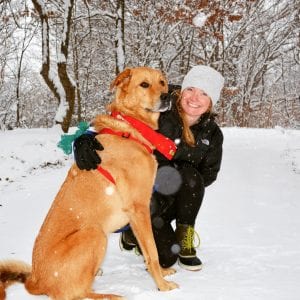
Dr. Calhoun lives in Fitchburg with her golden retriever/Great Pyrenees mix named Charlie. In her free time, she enjoys running, paddle boarding, hiking and traveling.
Baylee obtained her degree in Veterinary Technology from Madison College in 2019 and is working on her Bachelors in the same field from Mizzou. Prior to joining the MVS team in February 2022 as our laboratory technician, she worked as an emergency nurse at a different emergency veterinary clinic.

Baylee lives in Waunakee and shares her home with a DSH named Abigail, a Cockapoo named Mollie Jo, a Chihuahua mix named Joey, a Norwegian Forest Cat named and Eli and a goldfish named Shamu.

Nikole attended M State in Fergus Falls, Minnesota and graduated with an applied associates degree in equine sciences in 2016. Then, she attended Broadview University in Madison and graduated in 2018 with an applied associates degree in veterinary technology. Nikole joined the MVS emergency team in November 2018.

In her free time, Nikole loves to hang out with her dog, fish, camp and watch the New Orleans Saints. She shares her home in Madison with her American Pit Bull Terriers named Hades and Lucifer.
See All Staff