

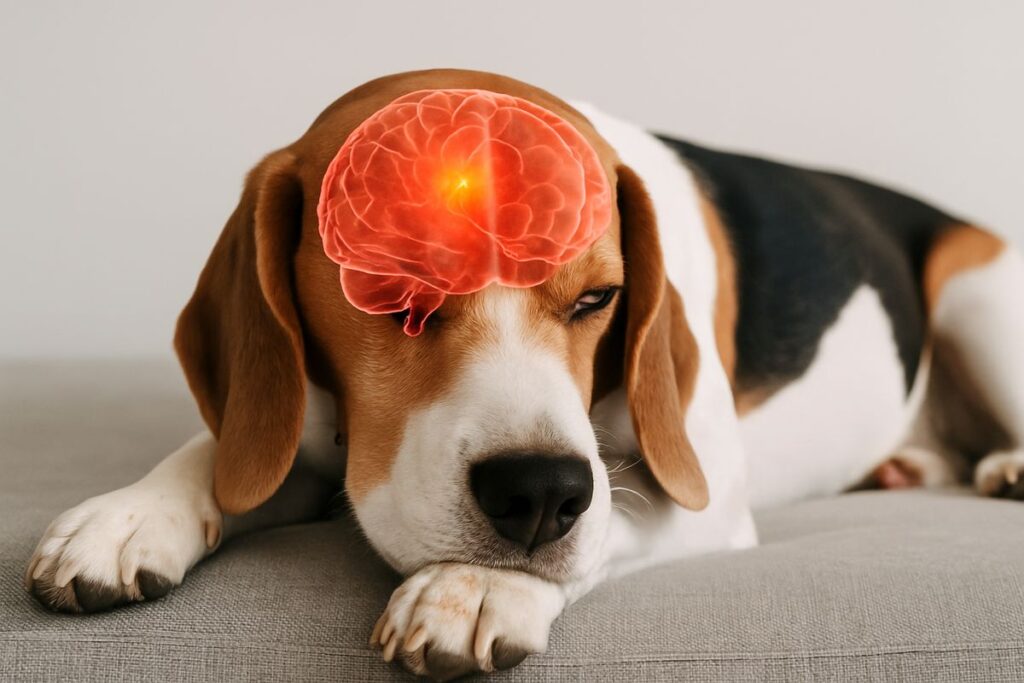
Meningoencephalitis of unknown etiology dog is a term most pet owners have never heard until a frightening day when their dog starts seizing, stumbling, crying in pain, or simply acting unlike themselves. It describes a serious inflammatory disease of the central nervous system, and because the early signs can be vague, it is one of the harder neurological problems to recognize quickly. In this guide, we explain what MUE means, how it is diagnosed, what treatment usually involves, and when urgent specialty care matters.
What MUE in Dogs Means
MUE stands for meningoencephalitis of unknown etiology. In plain language, it means inflammation affecting the brain, the spinal cord, the protective tissues around them called the meninges, or some combination of all three, without one clearly identified infectious cause.
That wording can feel frustratingly broad, and honestly, it is broad by design. MUE is often used as a clinical umbrella term. It tells us there is inflammatory disease in the central nervous system, but the exact trigger has not been definitively pinned down. In many cases, veterinarians suspect the immune system is inappropriately attacking the dog’s own nervous tissue.
Owners may also come across MUO, which stands for meningoencephalomyelitis of unknown origin, or MUA, meningoencephalitis of unknown aetiology. These terms overlap heavily. Different hospitals, specialists, and published studies may prefer one label over another, but they are generally describing the same category of non-infectious inflammatory brain and spinal cord disease.
Why is MUE so easy to miss early? Because it does not always announce itself with a dramatic emergency. Sometimes it starts with a mild head tilt, an odd gait, neck pain, hesitation on stairs, or a dog that seems quieter and less engaged. That can look like aging, an orthopedic problem, or even a bad day. Unfortunately, the nervous system rarely gives simple clues.

Why MUE Can Be Difficult to Recognize
One of the hardest things about MUE is that early symptoms can be subtle, inconsistent, or misleading. A dog may seem weak one day and nearly normal the next. Another may develop a mild balance issue that looks like an inner ear problem. A third may become withdrawn, restless, or unusually clingy, which owners understandably interpret as behavioral change rather than brain disease.
Seizures get attention fast, but neurological disease does not always begin there. We often see dogs whose first signs are neck pain, stiffness, wobbliness, knuckling of the paws, reluctance to jump, circling, or brief periods of staring and confusion. Inflammation in the brainstem or spinal cord can look very different from inflammation in the forebrain, so two dogs with MUE may appear to have entirely different illnesses.
There is another layer to the problem. Many conditions mimic one another in neurology. Back pain from spinal inflammation may resemble a disc problem. Loss of balance may resemble vestibular disease. Tremors may be mistaken for anxiety or muscle strain. If your dog’s episodes involve shaking or unusual spells, it helps to understand how tremors and seizure activity can differ, but either way, new neurological signs deserve veterinary attention.
Which Dogs Are More Often Affected
MUE is more commonly diagnosed in young to middle-aged dogs, and published reports as well as referral experience suggest it is seen more often in smaller breeds. That said, “more common” is not the same as “exclusive.” Large-breed dogs and mixed breeds can absolutely develop inflammatory brain disease.
Breed trends matter because they raise suspicion earlier, not because they make the diagnosis automatic. A young small-breed dog with seizures or neck pain may push MUE higher on the list of possibilities. A Labrador or mixed-breed senior dog with similar signs still needs a full neurologic workup because the disease does not read textbooks.
Research on MUO and related disorders has identified breed associations, especially in referral populations, including small companion breeds and certain brachycephalic dogs. Those patterns are useful, but they are risk factors, not guarantees. No breed should be ruled in or ruled out based on demographics alone.
Breeds and age groups veterinarians watch closely
The breeds commonly cited in clinical literature include Pugs, Maltese, Chihuahuas, Yorkshire Terriers, and French Bulldogs. Some related inflammatory brain diseases are particularly associated with Pugs and Maltese. Young to middle-aged adults are often affected, though dogs outside that range can still develop MUE.
This is why we recommend focusing less on breed stereotypes and more on the actual symptom pattern. If a dog has progressive seizures, altered mentation, pain, or coordination changes, the priority is neurological localization and diagnosis, not guessing based on breed alone.
What Causes MUE
The phrase “unknown etiology” means the exact cause is not fully understood. That is not the same thing as saying veterinarians know nothing about it. Based on current evidence and clinical experience, MUE is widely thought to be immune-mediated. In other words, the immune system appears to generate harmful inflammation within the central nervous system.
A useful analogy is an overactive security system that begins attacking the house it is supposed to protect. The inflammation itself causes the damage. Swelling, immune cell infiltration, and tissue injury can disrupt how the brain or spinal cord functions, which then produces signs such as seizures, imbalance, weakness, pain, and changes in awareness.
The challenge is that veterinarians cannot safely assume inflammation is immune-mediated without first considering other explanations. Infections, tumors, vascular events, metabolic disease, toxin exposure, and structural problems can create overlapping neurological signs. That is why MUE is usually a diagnosis made through exclusion and advanced testing, not through one quick office test.
MUE vs. infectious encephalitis
This distinction matters a great deal. Infectious encephalitis refers to inflammation caused by an organism such as a fungus, bacterium, parasite, tick-borne pathogen, or virus. MUE usually refers to non-infectious inflammatory disease, often presumed immune-mediated after appropriate testing.
Why does that matter so much? Because treatment can move in opposite directions. Immune-mediated MUE is typically treated with immunosuppressive drugs, often starting with corticosteroids. If a dog actually has an infection, suppressing the immune system without recognizing that infection could make the situation worse. Consequently, neurologists work carefully to rule out infectious causes before committing to long-term immunosuppressive therapy.
Related terms owners may encounter
Owners researching this topic often encounter GME, NME, and NLE. These are related inflammatory brain diseases that fall under the broader umbrella many specialists now call MUO or MUE.
GME stands for granulomatous meningoencephalitis, NME for necrotizing meningoencephalitis, and NLE for necrotizing leukoencephalitis. Historically, these names were used to describe specific inflammatory patterns, often confirmed with pathology. In everyday referral practice, though, many dogs are clinically grouped under MUE or MUO because the exact subtype cannot be definitively classified without tissue biopsy, which is not routinely done.
Common Symptoms of MUE in Dogs
Symptoms vary depending on which part of the nervous system is inflamed. Forebrain inflammation often causes seizures, circling, and behavior change. Brainstem or cerebellar disease may cause head tilt, wobbliness, falling, or abnormal eye movements. Spinal cord involvement may cause pain, weakness, knuckling, or even paralysis.
That wide range is why MUE can look like several different diseases at once. A dog may have pain and balance trouble. Another may have seizures only. Another may have a stiff neck plus progressive weakness in one or more limbs.
Seizures, behavior changes, and altered awareness
Seizures are one of the better-known signs of brain inflammation, but they are not the only brain-related symptom. Some dogs have episodes of staring, seeming “checked out,” pacing, circling, getting stuck in corners, or failing to respond normally to familiar people and routines. Others become suddenly anxious, irritable, disoriented, or unusually dull.
These changes can be easy to dismiss at first, especially if they come and go. But a dog who seems mentally different is giving meaningful information. If the episodes are suspicious for seizure activity, a closer look at what seizures can look like in dogs can help owners recognize patterns worth documenting and reporting right away.
Weakness, wobbliness, and loss of coordination
Inflammation affecting balance centers, nerve pathways, or the spinal cord can make a dog appear drunk, weak, or clumsy. Common signs include stumbling, crossing the limbs, dragging the paws, knuckling, leaning to one side, falling, tremoring, or struggling to rise.
Some dogs stop wanting to jump onto furniture or climb stairs. Others seem slow on turns or develop a wide-based stance to keep from falling. If the balance problem is sudden and prominent, veterinarians also consider inner ear and vestibular disorders, which is why comparison with other causes of acute balance loss is often part of the workup.
Neck pain, back pain, and spinal cord-related signs
Pain is an underappreciated part of MUE. When the meninges or spinal cord are inflamed, dogs may cry out, hold the neck stiffly, hunch the back, resist being picked up, or seem reluctant to move. They may tremble because movement hurts. They may also guard their spine during handling.
This is one reason MUE can be confused with orthopedic disease or disc disease. Spinal inflammation can look very much like a slipped disc at first glance. In some patients, conditions such as disc-related spinal compression remain high on the list until MRI and neurologic testing sort out the difference.

When Neurological Symptoms Require Urgent Veterinary Attention
Some neurological symptoms can wait for a prompt scheduled appointment. Others should not. A dog with seizures, collapse, inability to stand, severe uncontrolled pain, rapidly worsening weakness, or trouble swallowing or breathing needs immediate veterinary care.
The reason is simple. Neurological deterioration can happen quickly, and early stabilization can protect comfort, reduce complications, and improve the chances of reaching an accurate diagnosis in time. Waiting overnight with a dog that is actively declining is rarely the best plan.
Signs that should prompt same-day referral or ER evaluation
The following situations warrant same-day assessment, often through an emergency hospital or specialty center:
- A first-time seizure
- Multiple seizures in 24 hours
- A seizure lasting more than 5 minutes
- Collapse or loss of consciousness
- Inability to walk or stand
- Rapidly worsening weakness or coordination
- Severe neck or back pain
- Continuous circling, disorientation, or unresponsiveness
- Trouble swallowing or abnormal breathing
- Sudden vision changes with neurological signs
If a dog is non-ambulatory or losing function quickly, the situation may overlap with other emergencies discussed in this guide to sudden loss of movement and next steps. The exact diagnosis may differ, but the urgency does not.
How Veterinarians Diagnose MUE
MUE is usually diagnosed through a combination of neurological examination, advanced imaging, cerebrospinal fluid analysis, and testing to rule out other diseases. There is no single blood test that confirms it. That is why referral-level evaluation is often recommended when MUE is suspected.
We recommend owners prepare for a stepwise process rather than a one-test answer. The goal is not just to say “something is wrong neurologically.” The goal is to localize where in the nervous system the problem sits, identify the most likely cause, and choose treatment that fits the evidence.
Neurological examination and history
A detailed history matters more than many owners expect. Onset, progression, seizure timing, pain pattern, exposure risks, travel history, prior illnesses, and medication response all help shape the differential diagnosis. During the exam, a board-certified neurologist assesses gait, posture, reflexes, cranial nerve function, pain, awareness, and coordination to determine whether the lesion is most consistent with the forebrain, brainstem, cerebellum, or spinal cord.
That localization drives the rest of the plan. It is the difference between a broad guess and a focused diagnostic strategy. For owners unfamiliar with what happens during this visit, what specialists assess during a neurology workup can make the process feel far less mysterious.
MRI and advanced imaging
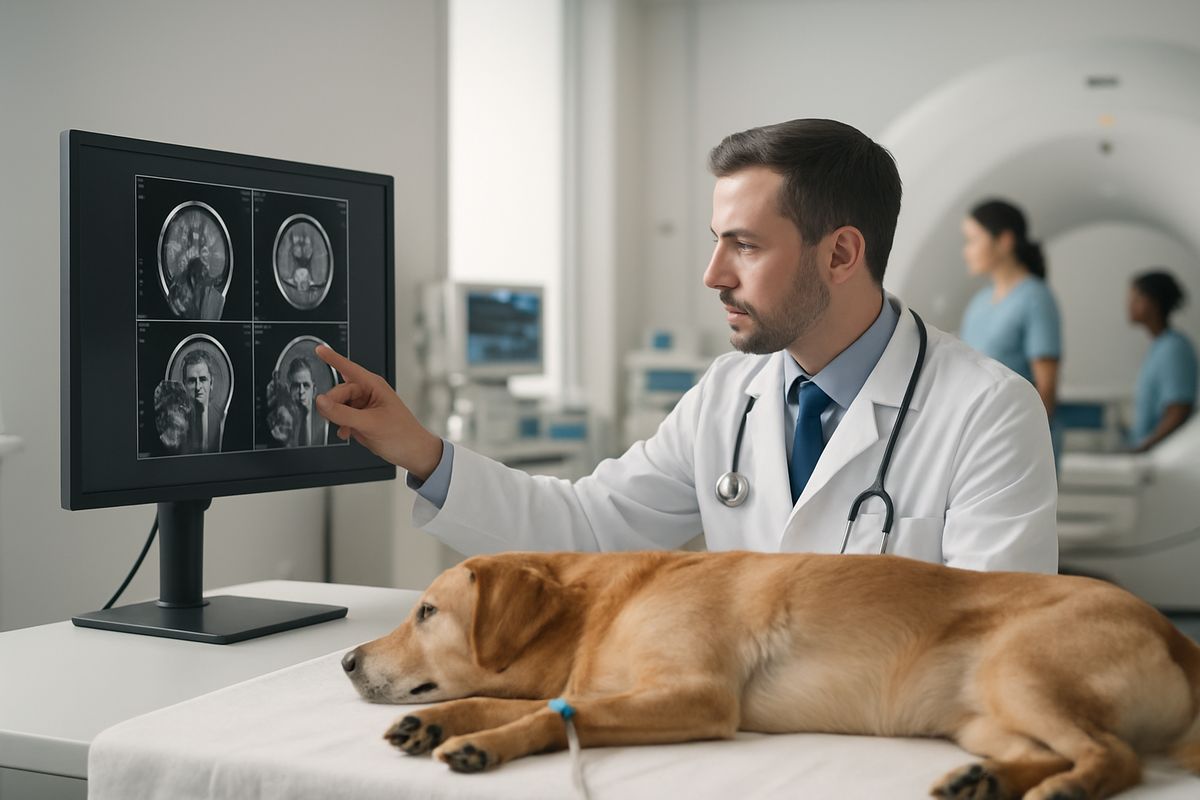
MRI is one of the cornerstone tests for suspected MUE because it provides detailed images of the brain and spinal cord. It can reveal inflammatory lesions, swelling, contrast enhancement patterns, and areas where the disease may be active. Just as importantly, it can help distinguish inflammatory disease from tumors, strokes, disc herniations, congenital abnormalities, or other structural causes.
Not every MRI abnormality proves MUE by itself, but MRI often narrows the field dramatically. It helps answer practical questions too: Is the disease in the brain, spinal cord, or both? Is there dangerous swelling? Are there lesions in multiple areas? Those findings influence both prognosis and treatment planning. Owners wanting a clearer sense of what these scans can and cannot show often benefit from reading how advanced imaging evaluates the brain and spine.
Cerebrospinal fluid (CSF) analysis
Cerebrospinal fluid, or CSF, is the fluid surrounding the brain and spinal cord. Analyzing it can provide strong evidence of inflammation and may help distinguish among different disease processes. Increased white blood cells, protein changes, and other patterns can support a diagnosis of inflammatory central nervous system disease.
CSF results need interpretation in context. They are combined with MRI findings, history, neurological examination, and infectious disease testing. A spinal tap is usually performed under anesthesia in carefully selected patients, and it is a standard tool in specialty neurology. For owners who want a deeper explanation, why neurologists collect and analyze spinal fluid is worth reviewing before an appointment.
Infectious disease testing and other rule-outs
Because MUE is a diagnosis of exclusion, testing often extends beyond MRI and CSF. Depending on the case and regional risk factors, veterinarians may recommend bloodwork, urinalysis, chest imaging, abdominal imaging, tick-borne disease testing, fungal testing, or additional infectious disease panels.
Geography matters here. In Wisconsin and the broader Midwest, tick exposure is part of the medical conversation, and travel history can broaden the infectious list further. The exact panel depends on the dog’s symptoms, MRI findings, CSF pattern, and exposure profile. Consequently, two dogs with similar seizures may still receive different testing plans.
What Treatment for MUE Typically Involves
Treatment for MUE usually focuses on calming harmful inflammation, controlling symptoms, and supporting the dog through recovery. In many cases, therapy begins quickly because uncontrolled inflammation in the brain or spinal cord can cause permanent injury.
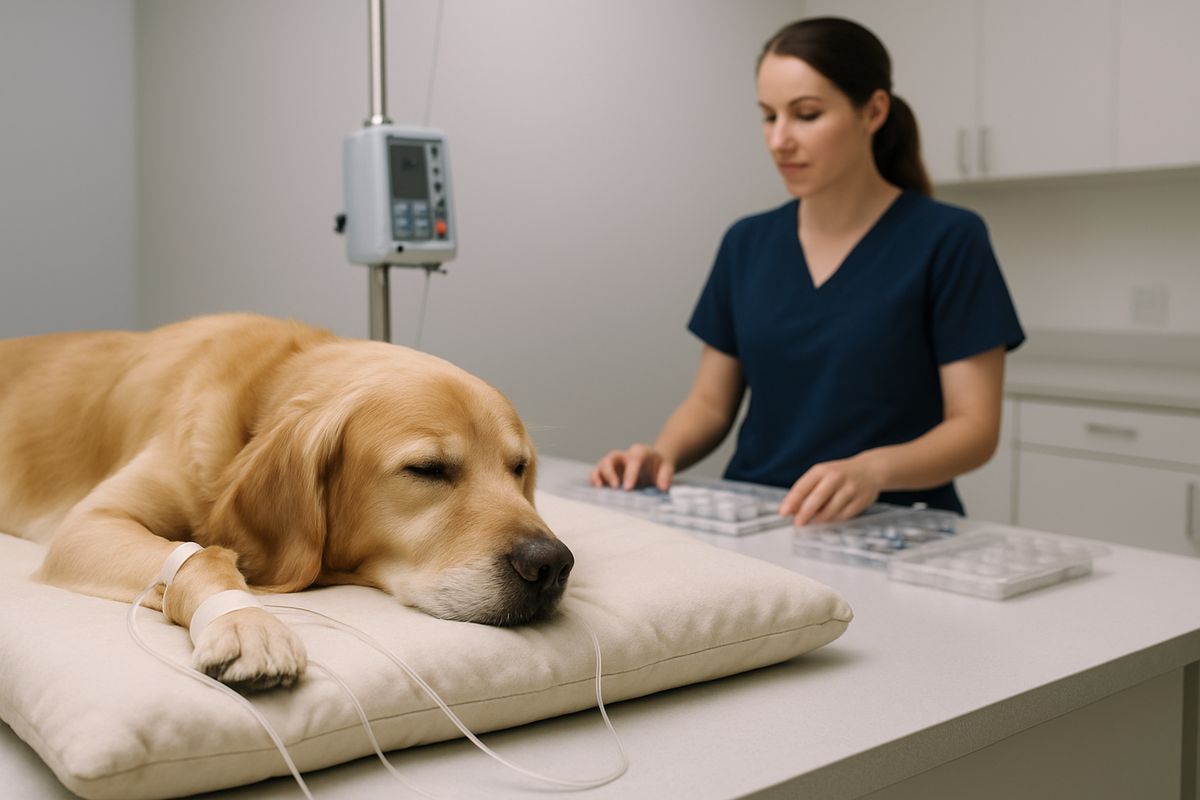
The plan is individualized. Some dogs are stable enough for outpatient management after diagnostics, while others need hospitalization for seizure control, pain management, IV support, or close neurological monitoring. Based on our experience, the best treatment plans are assertive but measured, with clear recheck points and realistic expectations for how fast improvement may occur.
Immunosuppressive medications
Corticosteroids, such as prednisone or dexamethasone, are commonly used because they reduce inflammation rapidly. In some dogs, a steroid alone is used initially. In others, especially those with severe disease or poor response, additional immunosuppressive medications may be added to improve control or reduce long-term steroid exposure.
Treatment often continues for months, sometimes longer. Tapering too quickly can trigger relapse, while leaving doses too high for too long can create complications. Side effects may include increased thirst, urination, appetite, panting, muscle loss, gastrointestinal upset, or infection risk. That is why follow-up is not optional. It is part of treatment.
Seizure control, pain management, and supportive care
Many dogs need more than anti-inflammatory therapy alone. If seizures are present, anti-seizure medications may be started right away. If neck or back pain is severe, pain control becomes a major part of the early plan. Dogs that cannot walk safely may require hospitalization, padded bedding, help with toileting, nutritional support, and careful turning or physical assistance.
Supportive care sounds basic, but it matters enormously. A painful, weak, or disoriented dog can decline simply because eating, sleeping, and moving become difficult. Stabilizing the patient while the anti-inflammatory treatment begins to work is often what gets the case through the first difficult days.
Why follow-up monitoring matters
MUE is not a diagnose-and-disappear condition. Dogs usually need repeat examinations, lab monitoring, medication adjustments, and sometimes repeat MRI or CSF evaluation. Relapse can happen. Medication side effects can happen too. Both need prompt recognition.
We recommend owners think of treatment as an active partnership. Daily observation at home, consistent medication schedules, and clear reporting of changes give the neurology team the information needed to adjust the plan before small problems become larger ones.
Prognosis: What Pet Owners Can Realistically Expect
Prognosis in MUE varies widely. Some dogs respond well to treatment, regain good function, and enjoy meaningful quality time for months or years. Others have aggressive disease, repeated relapses, poor seizure control, or severe neurological deficits despite treatment.
A balanced view matters here. MUE is serious. It can be life-threatening. Nevertheless, serious does not mean hopeless. Early recognition, thoughtful diagnostics, and carefully managed treatment can make a real difference in both survival and quality of life.
Factors that may influence outcome
Several factors influence prognosis. These include how sick the dog is at presentation, where the lesions are located, how many areas of the nervous system are affected, whether seizures are frequent or difficult to control, what MRI and CSF testing show, and how the dog responds in the first days to weeks of therapy.
Timing matters. A dog that is diagnosed and stabilized before severe brain swelling or prolonged seizure activity develops often has a better chance than one that arrives after rapid deterioration. Response to initial immunosuppressive treatment is also informative. Improvement does not always happen overnight, but early stabilization is a meaningful positive sign.
Long-term management and relapse risk
Some dogs require prolonged therapy, sometimes with very gradual tapering over many months. Even dogs that improve significantly can relapse later. That possibility is one reason ongoing neurologic follow-up remains important long after the initial crisis has passed.
Owners should also know that progress is rarely perfectly linear. A dog may improve, then plateau, then improve again. Medication adjustments are common. Relapse does not always mean treatment has failed, but it does mean the plan may need to change.
Living With a Dog Being Treated for MUE
Life after diagnosis is often emotionally exhausting at first. Owners are asked to give multiple medications on schedule, watch for seizures or weakness, and decide what changes are minor versus urgent. That uncertainty is normal. A structured home routine helps.
We recommend keeping daily notes on appetite, water intake, urination, bowel movements, energy level, coordination, pain, and any unusual episodes. Video recordings of concerning events can be extremely useful. Good footing on floors, blocking stairs when needed, lifting support for weak dogs, and a quiet recovery area can reduce falls and stress.
Home care usually works best when it stays practical:
- Give medications at the same times each day
- Use a written chart or phone reminders
- Keep fresh water available at all times
- Prevent slips with rugs or traction mats
- Limit jumping and stairs if balance is poor
- Track seizures with date, time, and duration
- Watch appetite and weight closely
- Report sudden worsening promptly
Owners traveling for specialty care often do better when they organize records, medication lists, and symptom videos in advance. Before a referral visit, preparing your pet’s history and documents for neurology can save time and reduce stress on an already difficult day.
Questions to ask your veterinary neurologist
A few focused questions can make the treatment plan easier to follow and less intimidating:
- How confident are we in this diagnosis?
- What conditions are still being ruled out?
- What are the goals of treatment right now?
- Which side effects should prompt a call?
- What changes count as an emergency?
- When should rechecks and lab work happen?
- What improvement should we look for at home?
- How likely is relapse in this case?
Those questions do not change the disease, but they often change how manageable the next few weeks feel.
MUE vs. Other Conditions That Can Look Similar
MUE is one of several diseases that can produce seizures, pain, weakness, or balance changes. That overlap is exactly why specialist evaluation is so valuable. Similar signs can come from intervertebral disc disease, vestibular disease, brain tumors, spinal tumors, stroke-like vascular events, toxins, metabolic disease, or infectious meningitis and encephalitis.
For example, a dog with neck pain and limb weakness might have spinal inflammation from MUE, but could also have disc extrusion, spinal neoplasia, or steroid-responsive meningitis. A dog with circling and seizures might have inflammatory brain disease, but a tumor or stroke could produce a similar picture. A dog with head tilt and falling might have MUE, but vestibular disease may be more likely.
This is why imaging and CSF testing are often needed. Clinical signs tell us there is a neurological problem. They do not always tell us which one.
Common Misconceptions About MUE
Several assumptions delay care in dogs with MUE, and they are understandable because neurological disease often behaves in unexpected ways.
One common misconception is, “If my dog is eating, it cannot be that serious.” Unfortunately, many dogs with significant brain or spinal cord disease continue eating, especially early on. Appetite does not rule out neurological illness.
Another is, “One seizure is not an emergency.” A single brief seizure does not always mean a dog must be hospitalized immediately, but a first-time seizure absolutely warrants prompt veterinary evaluation. Inflammatory brain disease, toxins, metabolic disorders, and structural brain lesions can all begin this way.
A third is, “Back pain always means a slipped disc.” Sometimes it does. But meningeal and spinal cord inflammation can cause very similar pain and stiffness. Treating presumed orthopedic pain without addressing underlying neurological disease can waste valuable time.
We also hear, “My dog is just anxious or getting older.” Behavior change, confusion, pacing, and altered awareness are sometimes dismissed because they are hard to categorize. But subtle neurological decline often hides behind those labels. When the pattern is new, progressive, or paired with imbalance, pain, tremors, or seizures, it deserves a true neurologic workup.
When to Seek a Board-Certified Veterinary Neurologist
Referral to a board-certified veterinary neurologist is often recommended when symptoms are progressive, multifocal, seizure-related, painful, or difficult to explain with basic testing. MUE is a prime example because diagnosing it well usually requires advanced localization, MRI, CSF analysis, and treatment planning that balances urgency with safety.
Specialty care is not only about technology, though advanced tools matter. It is also about interpretation. The same MRI lesion can mean different things depending on the exam, the CSF findings, the bloodwork, and the dog’s clinical course. A neurologist brings those pieces together into a focused plan.
For families in Wisconsin and the broader Midwest, travel for specialty care can feel daunting, especially when a pet is unstable. Still, when brain or spinal cord inflammation is on the list, early referral is often the fastest path to clarity. If you are weighing options locally, this overview of specialty neurology care in Madison explains what referral-level evaluation typically includes and why timing matters.
FAQs About Meningoencephalitis of Unknown Etiology in Dogs
Is MUE in dogs the same as MUO or MUA?
They are closely related and often used interchangeably in practice. MUE usually refers to inflammation affecting the brain and meninges, while MUO is a broader term that can include the spinal cord as well. MUA is another naming variation, more common in some regions and publications.
Can MUE be cured?
Some dogs achieve remission or long-term control, but many require extended treatment and ongoing monitoring. It is better to think in terms of disease management rather than a guaranteed cure. Response varies from dog to dog.
Is MUE painful?
It can be. Pain is especially common when the meninges or spinal cord are involved. Dogs may show pain through stiffness, reluctance to move, crying out, a hunched posture, or resistance to being picked up.
Can cats get a similar condition?
Yes, inflammatory brain disease can occur in cats, although the causes and diagnostic approach may differ. This article focuses on dogs. Cats with seizures, tremors, weakness, or balance problems need their own neurologic evaluation because the differential diagnosis is not identical.
How quickly does MUE progress in dogs?
Progression can range from gradual to very rapid. Some dogs worsen over days to weeks, while others deteriorate within hours, especially if seizures or severe inflammation are involved. Sudden decline is one reason same-day assessment is often recommended for new neurological symptoms.
Does MUE always cause seizures?
No. Seizures are common when the forebrain is affected, but some dogs present mainly with pain, wobbliness, weakness, head tilt, or behavior changes. The signs depend on where the inflammation is located.
If your dog has seizures, balance problems, weakness, neck pain, or other unexplained neurological signs, prompt veterinary evaluation is the right next step. Advanced diagnosis can change both treatment and outlook, and early specialty care often provides the clearest answers when every day feels uncertain.